
Serg Karpow / Unsplash
DATA CENTERS
Your Town Got the Data Center. It Never Got a Say.
The deal was signed before your town heard a word. No one had to ask.
In Memphis,the deal was finished. A $5 billion data center for xAI was announced, and only the Chamber of Commerce, the utility, and the mayor had known it was coming.
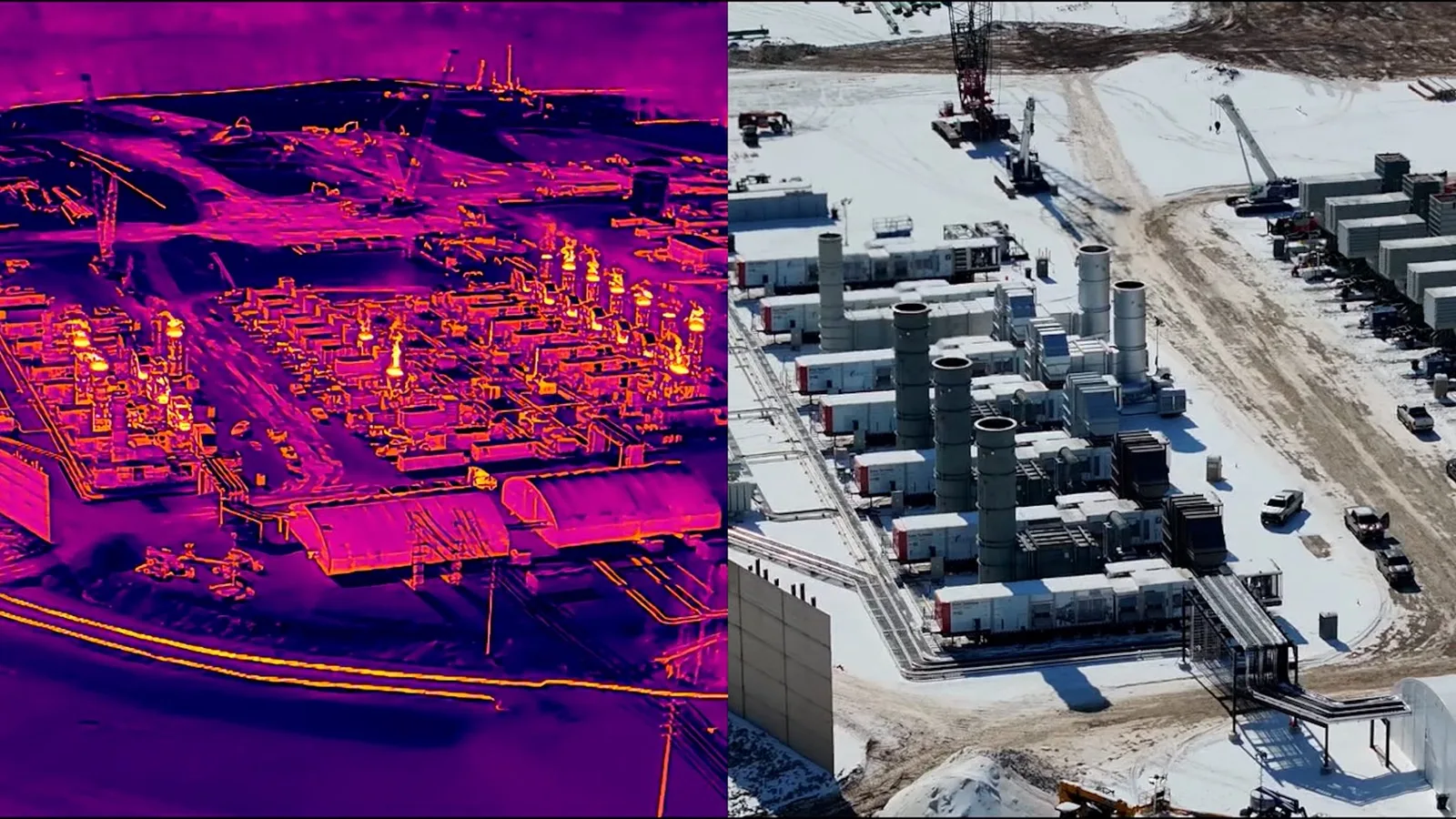
Photos later showed dozens of gas turbines running without air permits, next to neighborhoods already breathing some of the city's dirtiest air.
The first real public hearing came ten months in – hundreds packed a high school gym.
“How come I can't breathe at home, and y'all get to breathe at home?” Alexis Humphreys asked through tears, holding her asthma inhaler.123
What's happening
A data center is a warehouse full of computers that train and run AI.
Each one pulls huge amounts of power from your grid and needs cooling that never shuts off. Google, Microsoft, Amazon, Meta, and xAI are racing to build them, with their capital spending more than doubling over the past two years. But they come at a real cost to the surrounding communities.4
Your Electric Bill
Data centers used about 4% of America's electricity in 2023. The government's own energy lab projects that share could double – or even triple – by 2028.5
When demand jumps like that, electric utilities build more grid – and everyone who pays a bill helps cover it. In Virginia, regulators added $16 a month to the average home's electric bill, partly for data center demand.6
Your Sleep
In Dowagiac, Michigan, families are suing over a hum from the cooling fans that never stops. It's loudest at night and in winter, when the fans spin hardest – and it's been measured right at their homes. Doctors link constant noise like that to lost sleep, stress, and heart problems.87
Your Air
Every data center keeps banks of diesel generators for backup power – and they don't just run in blackouts. They run for testing, and when the grid is strained. In northern Virginia, home to the world's largest data center cluster, air pollution from these generators more than doubled from 2015 to 2023. Diesel exhaust is linked to asthma and heart disease.97
Your Water
Nationally, the water use numbers are small: every data center in America, combined, consumes less water in a year of cooling than the country's farms consume before lunch on one day.510
The real problem is local. About 2 in 3 new AI data centers went into counties already short on water – and companies keep the numbers quiet. When a newspaper asked how much of The Dalles, Oregon's water Google's data centers were using, Google backed a 13-month court fight to keep it secret. Ultimately, the town won the right to know and learned the data center used more than a quarter of the city's water supply.1112
Where are the rules?
These deals are made in private.
In Pine Island, Minnesota, city staff signed nondisclosure agreements, and residents were kept in the dark for two years.1415
In Port Washington, Wisconsin, residents learned a $15 billion data center was coming only after the deal was made.16
- Three neighbors who spoke up were arrested at a city council meeting.
- Residents launched a recall against the mayor.
In Saline Township, Michigan, the planning commission voted no to an OpenAI and Oracle data center – and the township board voted no.1718
- Days later the developer sued.
- Facing a court fight against some of the richest companies on earth, the town settled, and construction began weeks after the community said no.
And when pressure came in Memphis, xAI put its next data center just across the state line in Mississippi – and ran gas turbines without permits there too.19
The jobs promise is thin: even the largest data centers employ fewer than 150 permanent workers.21
YOUR RESTAURANT
a health permit before it opens
A FACTORY
an environmental review before it's built
xAI IN MEMPHIS
dozens of gas turbines, no air permits, next to neighborhoods breathing some of the city's dirtiest air
It's bigger than a data center
If a company will run gas turbines next to our neighborhoods without permits, should we trust them with the technology inside the data centers as it gets more powerful?22
These companies aren't building a better chatbot. They are in a race to build AI that does everything a human can do.
That's why they are recklessly building data centers without consulting the public.
If our town doesn't get a vote on the building, who gets a vote on what runs inside it?
The bigger picture
Keep humans in control
What you can do
Communities can get a real say before a data center goes in, and the AI systems these facilities support should get safety standards.
- Chandler, Arizona rewrote its zoning rules after years of complaints.27
- Virginia passed a law requiring the state's first data center noise standard – with fines up to $32,500 a day.28
- In Nottingham, New Hampshire, more than 20,000 people signed a petition against a proposed data center within a week. Hours before the hearing, the developer pulled the application.29
When neighbors organize, they can win – and the company can come back, because the rules protecting these towns mostly don't exist yet.3031
More than 800 community groups across 49 states are already organized on this. Towns can set the rules; yours can too. See the standards we're asking for.32
Questions people ask
It depends on where it is and how it's cooled. A large one can use as much water as a town of 10,000 to 50,000 people. This can become a problem depending on where companies choose to build. About 2 in 3 new AI data centers went into counties already short on water. The Dalles, Oregon is one of them – a dry stretch of the state that's been under drought declarations twice since 2020. Google's data centers there used more than a quarter of the city's water supply, nearly triple what they drew four years earlier. And Google funded a 13-month court fight to keep those numbers from the public.
No. That figure comes from worst-case estimates, and real water use varies a lot from one data center to the next – often it's far lower. Unfortunately, a lot of what goes around online about AI and water is overstated. For scale: America's farms consume more water by lunchtime on a single day than every US data center consumes in a year of cooling (USGS; national lab data). Count the water used by the power plants that run them, and it's still about three days' worth.
But while the overall usage isn't as significant as it's sometimes made out to be, the issue is local: companies often build water-hungry facilities in dry counties, in private, without the people who live there getting a vote.
Globally, they use about 1.5% of the world's electricity – a real and growing share. But it's smaller than you may have heard, and far below industries like agriculture or transportation. The serious harms are local: diesel generators and gas turbines polluting the air next door, a hum that never stops, water drawn from dry basins, and higher electric bills. Those harms land on specific towns – usually towns that never got a say.33
More than 3,000 data centers operate in the US today, and more than 1,500 are in development. In the biggest markets, capacity equal to nearly two-thirds of everything ever built is under construction right now. The four biggest tech companies plan to spend over $600 billion this year, most of it on AI infrastructure.13344
Yes, in places with a lot of them. When demand jumps, utilities build more grid infrastructure and pass the cost to everyone who pays a bill. Virginia's $16-a-month increase is the documented example.6
They're real – measured, documented, and now in court. Cooling fans and chillers run around the clock, and they spin harder in cold weather. That's why neighbors describe a hum that's worst at night. Fixes exist – setbacks, sound barriers, quieter cooling. Companies skip them when no one requires them.
Fewer than the sales pitch says. Construction jobs are real but temporary. Even the largest data centers employ fewer than 150 permanent workers – about the staff of one supermarket.
Sometimes. Towns have used zoning rules, recalls, and ballot measures to block or slow data centers. In Indianapolis, residents organized for months against a Google data center – and Google withdrew before the vote. But companies usually negotiate in private and announce when it's done. That's why we're asking for a real say up front, not a fight after the fact.
More resources
These are independent resources – not from us. Each one is worth your time.
Southern Environmental Law Center: Data Centers – Legal reporting on data center power demand, water use, and community wins.
World Resources Institute: Data Center Impacts – Research on how data centers reshape local grids, water, and land – and the tools towns can use.
Americans for Responsible Innovation: Data Center Playbook – A community guide to engaging on data center development – for residents, local officials, and organizers.
Sources34 references · tap to expand
Check everything – every number on this page comes from somewhere you can read.
- 1 ↩Prism Reports · Memphis secret deal; three entities knew · April 2, 2025
- 2 ↩Daily Memphian + CNN · Fairley High hearing; residents' inhalers · April–May 2025
- 3 ↩ProPublica / MLK50 · Boxtown pre-existing pollution burden · 2025
- 4 ↩Platformonomics (SEC-derived); CNBC / Fortune · Big Tech capex 2019–2026 · February 2026
- 5 ↩LBNL / DOE · Data centers ~4% of US electricity (2023); up to triple by 2028 · December 2024
- 6 ↩Inside Climate News · Virginia $16/month rate increase · January 2026
- 7 ↩EESI · Data-center noise; cold-weather worsening · 2024–2026
- 8 ↩Spectrum News Michigan · Dowagiac noise lawsuit · May 29, 2026
- 9 ↩VCU L. Douglas Wilder School · NoVA data-center generator air pollution more than doubled, 2015-2023 · 2026
- 10 ↩USGS Circular 1441 · US farm/irrigation water use (national baseline) · 2018 (2015 data)
- 11 ↩Bloomberg News (WRI / DC Byte data) · ~2 in 3 new US DCs in water-stress areas · May 8, 2025
- 12 ↩Data Center Dynamics + RCFP · The Dalles: >25% of city water; records fight · December 2022
- 13 ↩Data Center Map, via Pew Research Center · 3,000+ operating; 1,500+ in development · April 2026
- 14 ↩KAAL / ABC 6 News · Pine Island, MN: city staff signed NDAs; residents kept unaware · March 13, 2026
- 15 ↩MN House Session Daily · Pine Island, MN: officials and developer knew 2+ years before residents · March 11, 2026
- 16 ↩Wisconsin Public Radio · Port Washington recall; data center deal · February 17, 2026
- 17 ↩Fortune · Saline Township: board rejected rezoning; developer sued · May 6, 2026
- 18 ↩Detroit News · Saline Township: judge denies bid to slow construction · February 20, 2026
- 19 ↩Earthjustice; NAACP v. xAI · Southaven turbines run without air permit · April 2026
- 20 ↩Gallup · 71% oppose local AI data center · March 2026
- 21 ↩World Resources Institute · Fewer than 150 permanent jobs · 2026
- 22 ↩E&E News (POLITICO); CNN; SELC · xAI Memphis: 35 gas turbines, no permits · May 1, 2025
- 23 ↩Dario Amodei, “The Urgency of Interpretability” · Amodei: we don’t understand how our own AI works · April 24, 2025
- 24 ↩CBS News, 60 Minutes · Pichai: AI is a “black box” we don’t fully understand · April 16, 2023
- 25 ↩CNBC (Musk at SXSW) · Musk: AI more dangerous than nuclear warheads · March 13, 2018
- 26 ↩Business Insider; Future of Life Institute · Altman: AI may “lead to the end of the world” · June 2015
- 27 ↩City of Chandler · Chandler data-center zoning ordinance · December 2022
- 28 ↩Virginia Mercury · Virginia's first data-center noise standard · June 30, 2026
- 29 ↩NHPR · Nottingham, NH: petition tops 20,000+, proposal withdrawn · May 27, 2026
- 30 ↩New Hampshire Bulletin · Nottingham, NH: opposition context across surrounding towns · May 29, 2026
- 31 ↩NBC Boston · Nottingham, NH: community opposition, developer withdrawal · May 28, 2026
- 32 ↩NBC News · Opposition groups doubled, 49 states · June 17, 2026
- 33 ↩International Energy Agency · Data centers ≈1.5% of global electricity · 2026
- 34 ↩CBRE · Primary-market capacity under construction · February 2026
Ready to demand commonsense rules for AI?
See what we're asking for →